The Goods: Finding Hope in Goodbye Summertime
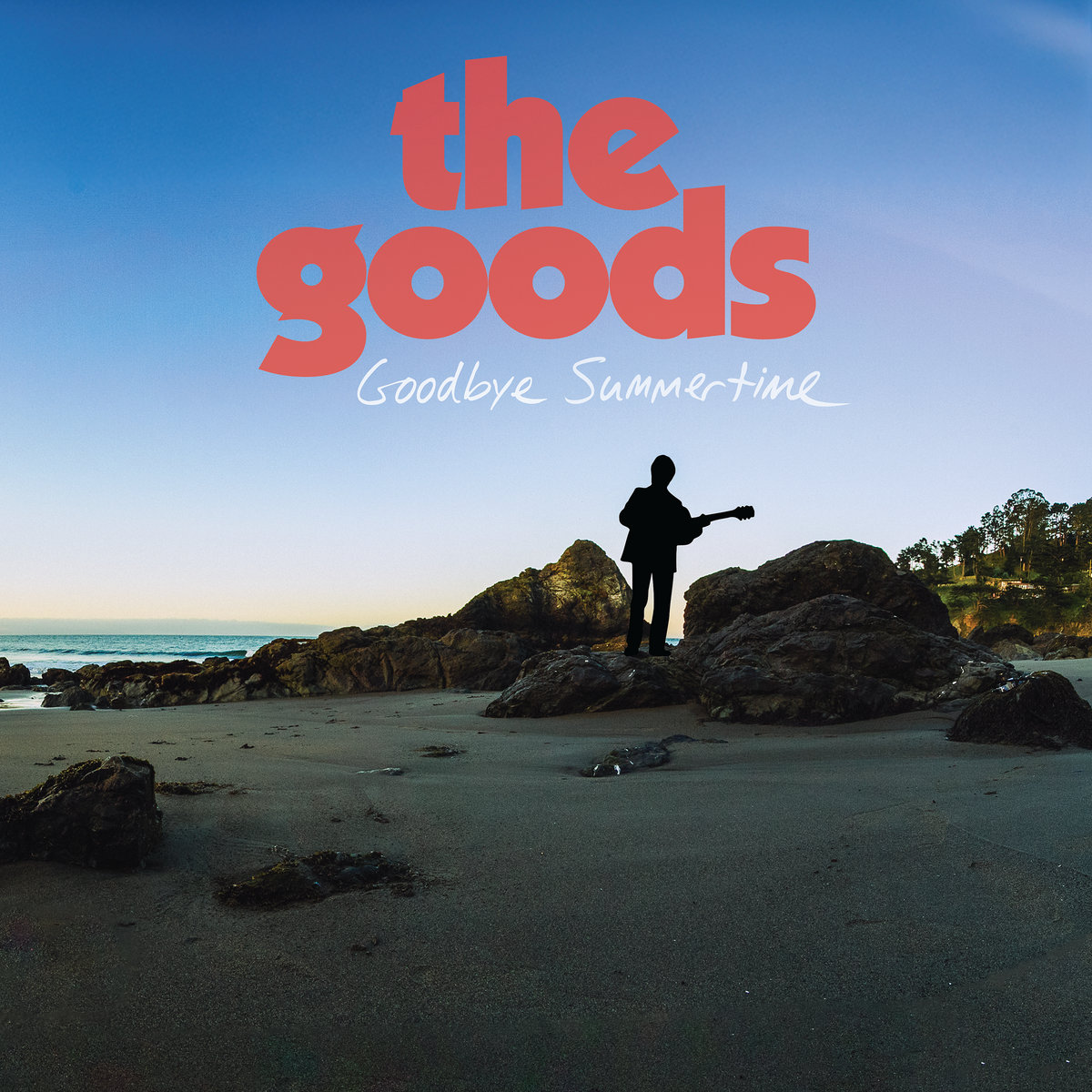
The Goods return this September with Goodbye Summertime, the follow-up to Don’t Spoil The Fun, one of my favorite albums of last year. Released by Dandy Boy Records, the new record builds on everything that made its predecessor so memorable: instantly gratifying guitar pop packed with irresistible melodies, but with an emotional depth that reveals itself the closer you listen. Much of that comes from Rob Good’s lyrics, which are remarkably honest, direct, and unafraid to be vulnerable.

Ahead of the album’s September release, I spoke with Rob Good about the emotions behind Goodbye Summertime, writing some of its most personal songs, and what lies ahead for The Goods.

Goodbye Summertime is such a melancholy album title to me. Was that the state of mind you were in when you wrote these songs, or is it more the atmosphere you wanted to convey?

It’s a melancholy album, really. It does have a lot to do with the state of mind I was in when writing it. A lot of the album is about change, and although change can be good it can also be painful, and you can mourn the loss of what you had to leave behind to get to a better place. But saying “goodbye” to something also means saying “hello” to something new, so it may be tinged with some sadness but there’s optimism in there too. To me, the title Goodbye Summertime captures those bittersweet feelings.

“Wing” is a song I keep coming back to, especially because of the lyrics and the line about asking someone to take you under their wing. It feels very vulnerable. Was that your intention when you wrote it?

“Wing” is definitely me at a vulnerable moment. The lyrics are very direct and honest. Sometimes in my writing I’m just trying to express a feeling that’s difficult to put into words, but in this case I was being more autobiographical. A lot of the songs on this record were written really quickly, in heightened emotional states, and then recorded right away. This is one of those songs. I don’t know about the intention because “Wing” just kind of spilled out – I think I needed to write it at that moment.

On parts of “Ginger Rose” you sing noticeably higher than usual. As a listener, that has a huge emotional impact on me—not just because it sounds beautiful. Were you deliberately trying to add an extra emotional dimension, or did the melody simply lead you there and require you to sing in that higher register?

When I’m writing, I just try to follow the melody where it wants to go. I don’t think I necessarily set out to write a song where I sang in falsetto, but as I was feeling my way through the chords it just seemed to take me there. I can remember around the time of writing “Ginger Rose” I was obsessed with several songs that featured a falsetto vocal – “Here There and Everywhere” is an obvious touchstone, but also “Tell Me Have You Seen Her” by the Chi-Lites and “How Deep Is Your Love” by the Bee Gees – so that influence must have crept in. I do love a falsetto vocal, and it was fun to explore that part of my voice.

“Waiting” feels quite different from the rest of the album. It’s just you and your guitar, I assume. Because it’s so brief, it feels more like a short story than a full novel—to use a slightly clumsy comparison. What made it such an important piece of the album as a whole?

I like that comparison! “Waiting” was just a song-fragment that was rattling around in my head, and that seemed to be all that it wanted to be. I think it’s okay for songs to be short. Sometimes you just have a snippet of a melody and it somehow feels complete – like if it were any longer it would somehow lose something. Tony Molina is obviously the master of this. I also love Pink Flag by Wire and of course “Your Majesty” at the end of Abbey Road. Not that I was explicitly thinking about any of that when I wrote “Waiting,” but I’ve just always found that short songs can be really impactful and beautiful. As far as its importance on the record, over the course of an album I feel like the little moments are just as important as the big swings, and “Waiting” is just one of those little moments.

When is Goodbye Summertime being released, and what do the next few months look like for The Goods?

Goodbye Summertime comes out on September 16, and our record release show is on September 11 at Little Hill in El Cerrito, CA. Then, starting September 24 we’re heading out for a European tour with Joel Cusumano. We’re currently looking at visiting Germany, Spain, France, Belgium, and the UK, and maybe a couple other places too.
Flipping the Script: How Adversity Shaped Skeletons

Sometimes the best records are born from the worst circumstances. After a frustrating battle to restore his previous album to streaming platforms following a false accusation of artificial streaming, David Woodard channeled that anger, urgency, and renewed sense of purpose into Skeletons. The result is his rawest and most immediate collection yet—a record where power pop hooks meet punk energy, and where vulnerability is worn as proudly as defiance.

Skeletons has quite an unusual backstory. What happened, and how did you arrive at a sound that leans just a little more toward punk than power pop?

Two months after releasing Everything Belongs, I got an email from CDBaby telling me Apple Music had removed the album for irregular streaming activity. They listed bots, fake accounts, and playlist manipulation as possible infractions. None of which I had done.

CDBaby told me to contact Apple Music directly. Apple Music told me they only deal with distributors. I went back to CDBaby. They ghosted me. For weeks. I tried social media. I filed a BBB complaint. I watched my weekly streams drop to zero. Eventually CDBaby replied, reiterated why the album had been removed, and closed the case.

So I reopened it. Filed another BBB complaint. Kept pushing. A few days before Christmas they agreed to resubmit. The next morning it was back.

I tell this story because the system is designed to make you give up. If this happens to you, don’t. Keep pushing.

As for the sound of Skeletons, that story starts a couple of years earlier. I randomly picked a music documentary one night and landed on Filmage: The Story of Descendents/All. I had never heard of the Descendents. I watched it eight times. Listened to their music constantly. Fell down the rabbit hole of everyone they influenced. Even travelled to Chicago to see them.

I grew up in the suburbs in the late seventies and eighties. Punk was happening but I was too young and too removed to get it. So, I feel like I am living my musical life backwards. Discovering at 57 what I should have found at 17. Skeletons is what that sounds like.

On the title track, you really go for it vocally, making the performance feel incredibly powerful yet also very vulnerable. Was that contrast intentional, or did that tension simply emerge naturally as you were recording it?

I don’t consider myself a vocalist. I spent twenty-five years playing with people who were real vocalists and learned what I could from watching them work.

When I stepped out on my own, I had to make peace with having a limited set of tools. I have some range (I can squeeze out a high A# if I must), and I like what my voice does when I am pushing hard. There is something that comes out under pressure that I find more interesting than anything I produce when I am comfortable.

For the studio-philes, I also switched from a condenser mic to a dynamic mic for vocals. Condenser mics reward control and precision. Dynamic mics reward commitment. For a rawer record it made sense.

The vocal on Thus Far is probably the best example. The inspiration was a YouTube video of a street band in the UK performing U2’s With or Without You. The singer is just singing his guts out on a street corner. Everything he has. Perfectly imperfect. I wanted to chase that feeling.

Whether you call it power pop or punk pop, the music lives and breathes through irresistible hooks and catchy choruses. It must be a wonderful feeling to write a sad song where all those elements come together so perfectly. What does that feel like as a songwriter?

You have to have songs people want to listen to. That’s it. Nothing saves a record full of songs no one wants to hear.

I’m grateful I can do what I do. Modern technology is remarkable. A guy in a room in Nashville makes a record and someone in Sweden finds it and plays it on their radio show. That still gets me.

And when someone tells you a song meant something to them, that’s the whole reason you pick up the guitar in the first place. Every musician reading this knows exactly what I mean.

Given the way this record came together, I imagine there was an even stronger desire to prove yourself and make sure people heard it. Did you feel that, or was it still most important simply to make the record you truly believed in?

The initial impulse was about flipping the script. I had been accused and effectively convicted of something I didn’t do. That is a peculiar kind of shame and embarrassment. The quickest antidote I could think of was to get something new into the world as fast as possible.

The irony is that urgency probably helped the record more than any deliberate artistic intention could have.

Everything Belongs was me trying to be edgier, and I like what I did. But looking back I was reaching for some low hanging fruit of politics to feed a sense of discontentedness.

With Skeletons the urgency and discontentedness was personal. I wasn’t trying to sound productively maladapted. I just was.

David Woodard and the band sound absolutely huge on Skeletons. How did you achieve the sound you had in mind?

Less was more. That’s the honest answer.

Fewer takes. Less processing. More economy in the sonic space. The blueprint is basically two guitars, bass, and drums. The vocal harmonies are sparser with more duets than trios and less stacking. Everything that remains is working harder.

A lot of this was unintentional. Recording fast to flip the script on a bad situation produces its own kind of serendipity. Some of the things I like most about this record I didn’t plan.

Paul Collins on 60 Minutes of Power Pop: From the Stage to the Screen

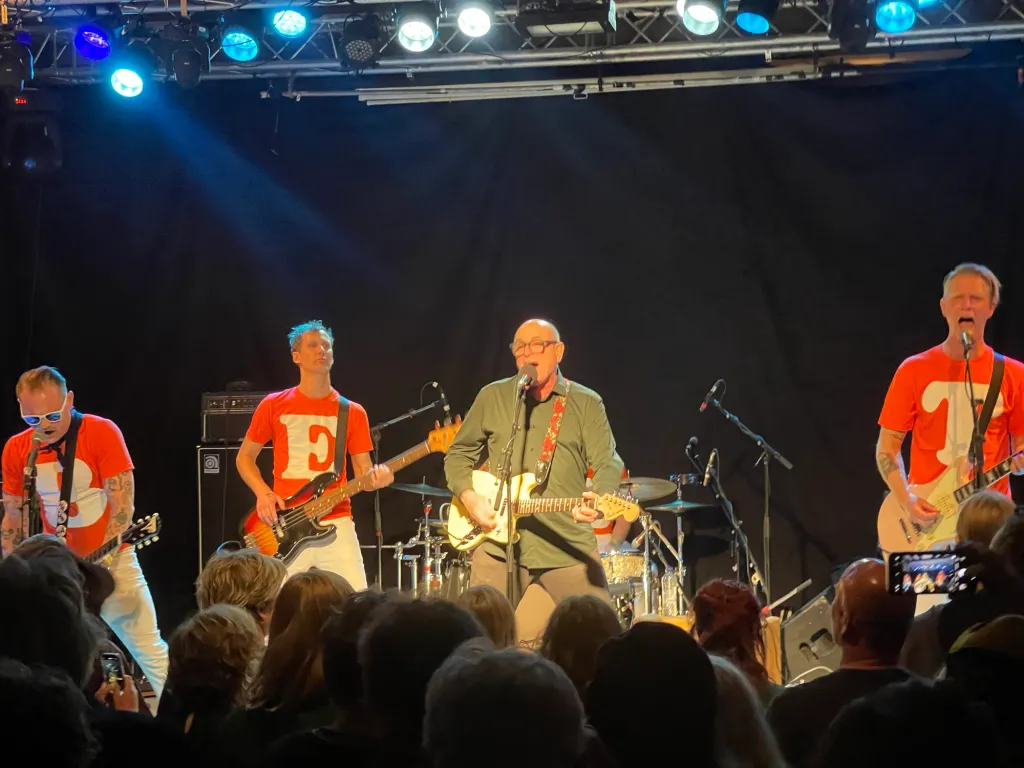
On Sunday, April 6, 2025, Paul Collins played at the new dBs here in Utrecht. He had promised “60 Minutes of Power Pop” beforehand, and that’s exactly what we got: in a blistering one-two-three-go rhythm, he blasted through nearly all the classics from the first two The Beat albums, along with a handful of gems from The Nerves. Collins was the undisputed King of Power Pop, urging his much younger backing band on with infectious energy, never letting the pace drop for a second.

Next to me, I saw my two sons, aged 21 and almost 23, watching it all with big smiles. During “Hanging on the Telephone,” a spontaneous family dance broke out, and for a moment, we found ourselves in Power Pop heaven.

What an amazing night!

That Utrecht show was just one stop on a unique tour in which Collins performed with different backing bands. The entire adventure has now been captured in a wonderful documentary, following the tour from rehearsals to performances around the world.

I spoke with Paul about how the film came together, what it was like working with so many different musicians, and why the project has already been attracting attention from film festivals. He also shared some exciting news about an upcoming release celebrating the 50th anniversary of The Nerves.

How did the idea for the movie come about?

Paul Collins: I was in Mallorca after I did that show for Paco, and one morning I said to myself, “I really want to document this. I want to let everyone know that I did it.”

I thought it was a tremendous undertaking, and I really surprised myself with how well it turned out.

I’d collected clips that people had posted about the different shows, so I thought I would use those as the basis for putting everything together. One of the clips was done by the filmmaker Tom Fleming, and it was of a very high quality. So when I got in touch with him, I thought I’d ask, “Do you want to help me make this into a film?” His immediate answer was yes, and I’m so glad that he did, because I think it turned out great.

60 Minutes of Power Pop is such a great concept. Did the idea come together all at once, or did it evolve over time?

Paul Collins: Yes, it all came together at the same time.

I was thinking about how I could improve the shows, which is something you’re always doing. How can I make it better? How can I get people to come out?

And it just came to me in a flash. Why don’t I just do the best songs by The Beat and The Nerves? There are so many, and that would be non-stop power pop!

Just one great song after another.

So that was the inspiration for everything. Once I had that, everything else just snowballed.

In the film we see you performing with a number of different backing bands, and it all seems to come together effortlessly. I imagine organizing that must have been quite a challenge. How did you make it work?

Paul Collins: I surprised myself with how easily it fell into place, although I knew each time I was taking a tremendous gamble that it might not work out.

I vetted the bands as best I could. Toyozo I knew from Japan, and I knew he was serious about this music. I had total faith that he would come up with two guys of the same caliber, and they were amazing. We really could have done it after one rehearsal. After the first rehearsal, I said, “Wow, it’s done.” But we did the second one just to be on the safe side.

It was more or less the same thing with every band. The Manikins, again, I vetted them. I saw that they were touring, and they were from Switzerland. The Swiss are famous for being very meticulous. Once again, when I showed up, they had everything locked down, and it was really amazing. I gave myself a number of days in their hometown. They put me up in a very nice place, so I got to hang out there. We had a buffer in case there were any problems, but we really didn’t need it.

It just kind of went on like that. The guys in France, The Sutles, were the same way. I did two rehearsals with them, and we were really ready to rock. We were supposed to do more shows, but unfortunately two of them got canceled. One of the clubs closed—those kinds of screw-ups.

I loved playing with them. I was really hoping we could do more shows, and hopefully we will in the future.

The same thing happened with the guys in California. That was another case where a club owner sent me a video of them doing “Working Too Hard,” and I got in touch with them. They immediately said yes, and I went out there. Again, I had a buffer. I think I was there for almost ten days, just hanging out with them.

That was really a lot of fun. I stayed with Dustin and his family, got to know his wife and his kid, and we did it Long Beach style.

We had time to do a couple of rehearsals, but basically I didn’t do more than two rehearsals with any of these bands, including the guys in Mallorca. We’re old friends.

The film is currently being booked for several film festivals, and there already seems to be a lot of enthusiasm from festival programmers. Why do you think it has struck such a chord with them?

Paul Collins: Well, it’s been a real eye-opening experience submitting to festivals because of the way they go about things. You have to submit, and then you have to wait a long time before you find out whether you’re even in.

So far, we’ve been lucky. We’ve been accepted in Los Angeles, Berlin, Paris, and, most recently, Tokyo, and we’re hoping for more.

We’ve also submitted to Barcelona, the Woodstock Festival here in New York, and the Long Beach Festival, so hopefully we’ll get some more acceptances.

To date, the only showing we’ve had in a movie theater was in Los Angeles. A bunch of my friends went, Tom Fleming went, and Softjaw went too. It was great. They saw it on the big screen, and everybody loved it.

That’s the caveat, though, because getting accepted into a festival doesn’t always mean your film gets screened. They can only show a certain number of films.

So the second tier is finding out whether they’re actually going to show your film, and we’re still waiting to hear about that from some of these festivals.

At a certain point, we’ll just turn it over to our own platforms and let everybody see it.

We have a two-year license to do that, and we will.

Looking back at the past few years—the touring, the recording, and now the film—what keeps you inspired and gives you the energy to keep going full throttle?

Paul Collins: That’s the easy part. What keeps me going is that I love it.

This last show, The Best of The Nerves and The Beat, is also coupled with the fact that Third Man Records is releasing the 50th anniversary edition of The Nerves on October 8, which they’ll be announcing soon. It’s a double album with all those great songs.

We included some of the Breakaways songs along with the Nerves songs—everything from the vintage 1974 to 1978 period. We found the source tapes, and most of it is studio material, so the sound is incredible. It’s a great document of the work that Jack Lee, Peter Case, and I did.

So it’s a great impetus to go out there and perform this stuff.

The last show I did here in New York was my best show in New York in many, many years. We played TV Eye, it was sold out, and the audience was just fantastic. There were people like yourself with their kids, people on first dates, young kids, older kids—kids my age. We’re all kids.

So it’s a very nice situation now. The people who follow this kind of music, and the people who follow my music, are great. It’s just wonderful. Without sounding corny, it’s a loving crowd, and I really enjoy it. It gives me a tremendous amount of satisfaction to be able to do it, and I’m happy with the place I’m in now.

I’m able to do what I do, and I have no trouble surviving these days, so it’s all good.

When Autumn Feels Like Spring: Splitsville’s Mobtown

When old heroes release a new album, it’s often unfair to compare the new work with what they created in their glory days. But because they’re heroes, you accept a new standard of quality—just as you do with autumn when thinking of spring. None of this applies to Mobtown: Splitsville’s new album sounds as fresh and exciting as their releases from the turn of the millennium. Maybe Cold Open isn’t the perfect opener, but after that, it’s nine straight hits—flawless, brilliantly executed, and perfectly produced power pop, with Perry Hall and I Hate Going to Hutzler’s as two random highlights that I was singing along to after just a couple of listens, coloring my day in bright tones. In all this excitement, I’m tempted to say it won’t get any hotter this year—but maybe it goes even further, and I’m ready to label it a Modern Power Pop Classic right now.

A Grand Night Out: Das Pop’s Triumphant Return to the Stage

Bent van Looy, who in recent years has released a handful of beautiful solo albums in collaboration with Jason Falkner, is often perceived as a dandy—an intellectually vain figure—and rightly so. Much like Jarvis Cocker, he embraces this persona with flair, and in both cases, it’s a joy to witness and to listen to. That was certainly true last Wednesday, when Van Looy led the long-awaited return of his band Das Pop after a 14-year hiatus.

In the late ‘90s and early 2000s, following the decline of grunge, Belgian indie pop experienced a golden era. Bands like K’s Choice, dEUS, Soulwax, and Das Pop released unique and compelling music that reached far beyond Belgium’s borders.

Now, with just one new song in hand, Das Pop is staging a reunion, and their performance at De Roma in Antwerp felt like a triumphant homecoming. Van Looy called the stage—set in a venue with the grandeur of an opera house and the acoustics of a premier pop temple—his home.

Van Looy clearly understands the unwritten rules of pop band reunions: it’s not just about playing the hits. Of course, the hits are there—sung loudly, danced to, embraced in moments of shared nostalgia—but it’s during the deeper cuts that the bond between band and audience grows strongest. The hall fills with a sense of intimacy and devotion. This is no place for critics; this is a gathering of true fans. A celebration of recognition, of recent nostalgia, and of the vibrant legacy of Belgian pop music.

The Guess Who’s Erased Era: Rediscovering Plein D’Amour

The Guess Who, the legendary Canadian rock band known for hits like “American Woman” and “These Eyes,” is back together! Original members Randy Bachman and Burton Cummings have announced that they will go on tour in 2026 under the name The Guess Who. This reunion follows a years-long legal battle over the use of the band name, which was settled in September 2024 in favor of Bachman and Cummings.

What’s strange, though, is that in recent years there was a really solid version of the band recording new music and playing live extensively. Plein D’Amour from 2023 is a refreshingly strong album, with a sound that blends the playful ’90s power pop of Jellyfish with the early ’80s AOR of bands like Dakota, Donnie Iris, and Franke and the Knockouts—all delivered by Derek Sharp, a fantastic vocalist.

After Bachman and Cummings reclaimed the band name, the recent history was wiped from social media, and suddenly everything is about American Woman again. But Plein D’Amour is too good to be forgotten, and has now been re-released as the debut of Derek Sharp and the Champagne Jam. Go listen to it!

Scratching the Gloss: Rediscovering Raw Gems in the Aussie Top 200

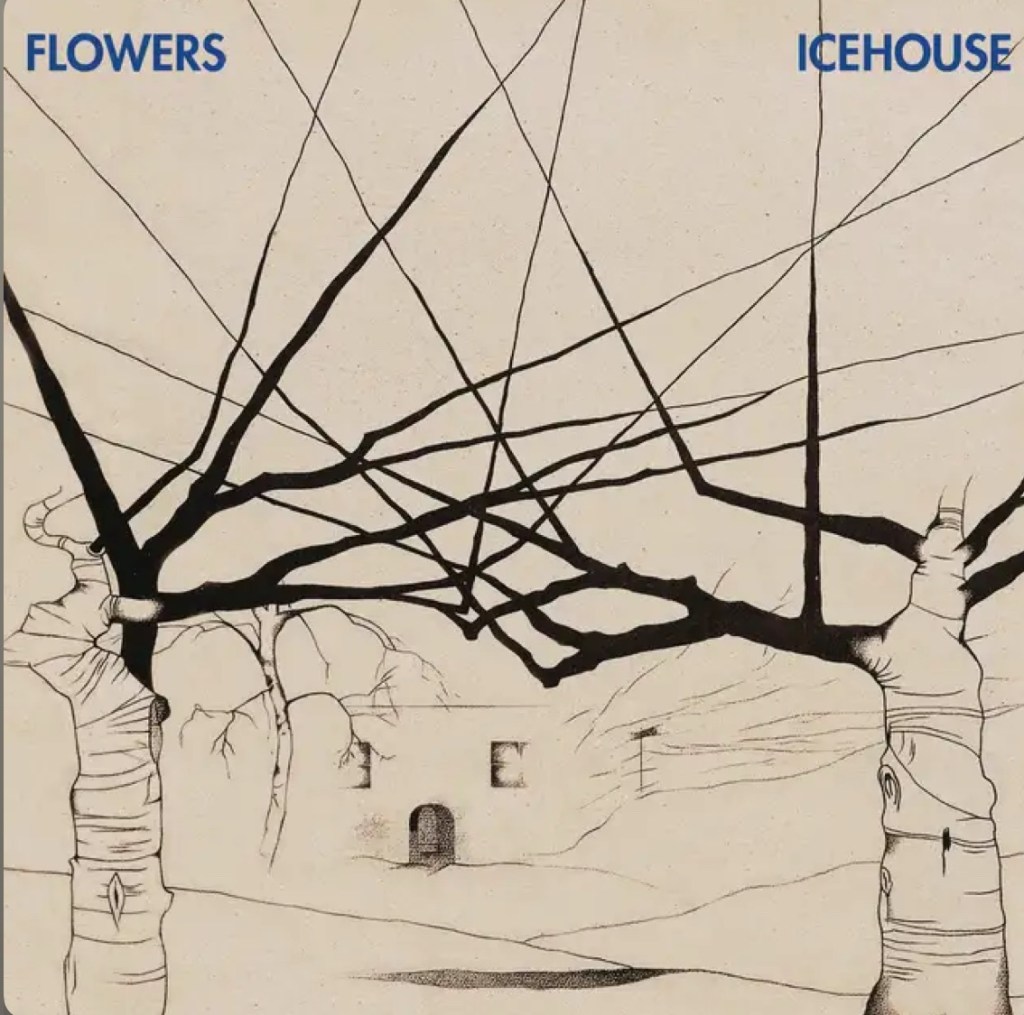
This week I found myself deep in the pages of an old Australian Rolling Stone issue featuring the 200 best Australian albums. Unsurprisingly, it included many of my longtime favorites—Cold Chisel and Jimmy Barnes, Paul Kelly, You Am I, Crowded House, The Go-Betweens, Australian Crawl, and Hoodoo Gurus. But I also discovered something I’d somehow missed: Icehouse by a band then still called Flowers. The album’s title eventually became the band’s name, and frontman Iva Davies would later find international success with sleek, shimmering hits like “Crazy” and “Hey, Little Girl.” While I’ve always enjoyed those songs, they felt a bit too polished for my taste, which is probably why I never dug deeper.

But that glossy finish is absent on Icehouse, the debut. What you hear instead is a band in the midst of a raw, inspired search for its own voice—lifting ideas from all corners of the early ’80s soundscape. There’s Ultravox in “Walls,” The Knack in “Sisters,” Styx in “Boulevarde,” The Cars in “Nothing to Do,” INXS in “Can’t Help Myself.” And yet, these aren’t just imitations—they feel like touchpoints in a larger collage. The album stands as a kind of beautiful watermark for the New Wave sound of 1982: a swirling, energetic hodgepodge of everything that was vibrant and in motion at the time. What a great surprise.

This Top 200 list is incredibly rich, and if you ever come across it, I hope it takes you on as rewarding a journey of discovery as it did for me. I’m not done yet—next up: the Sunnyboys. Of course they’re on there too, and the editors of Rolling Stone place them on the same pedestal as The Modern Lovers. I think I see that differently, but there’s no denying that this collection is special—challenging and full of gems, even by today’s standards.

Listen, the Snow Is Falling… in Utrecht

Until a few weeks ago, I didn’t know Dean Wareham. But a friend invited me along because one of his favorite Dutch alt.country bands was opening for Wareham at dB’s, right here in Utrecht.

In preparation, I took a deep dive into Wareham’s catalog, but I didn’t immediately connect with the key moments. It turned out I had heard his music before — and even reviewed it. In the early 2000s, I listened to a couple of albums he made with his wife under the name Dean & Britta, for hanx.net, a website I ran with two friends.

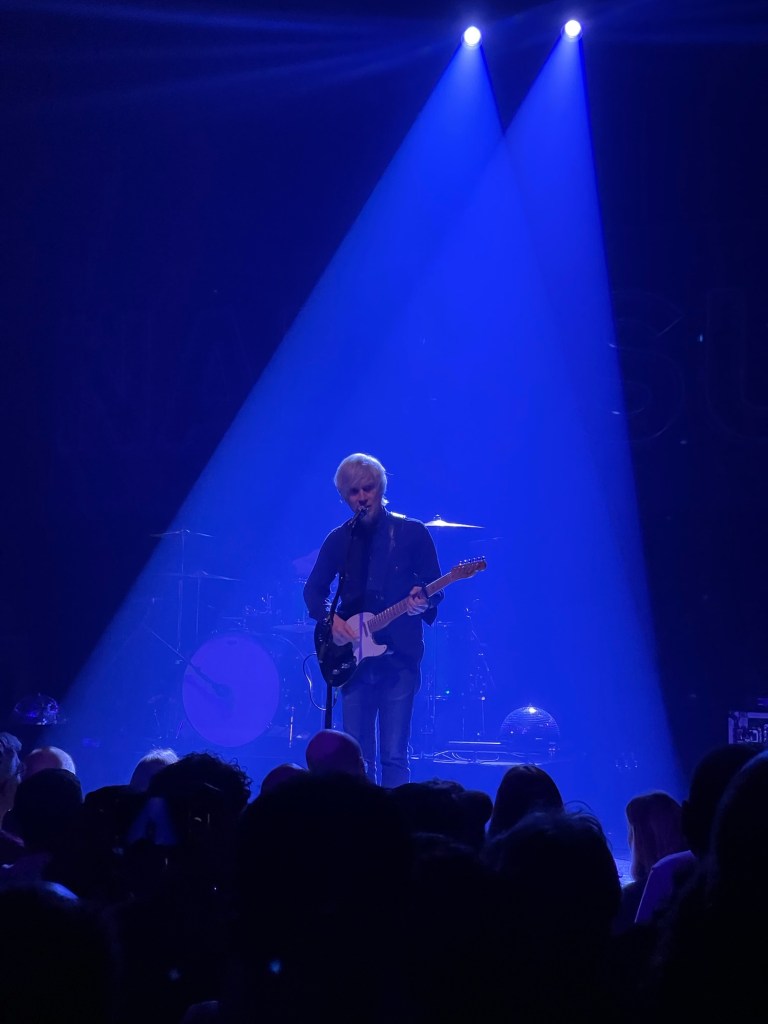
But that night, from the very first notes, I was shown a beauty I hadn’t picked up on during my prep. Wareham’s storytelling is lovely, but above all, it’s his guitar — that “why my guitar gently weeps” kind of sound — that truly stands out. He played a few songs from his new solo album, but he, Britta, and the drummer clearly knew what the crowd came for: the Galaxie 500 and Luna classics.

Highlights included Don’t Let Our Youth Go to Waste, 23 Minutes in Brussels, and a truly stunning Listen, the Snow is Falling, sung beautifully by Britta. But naming just three songs doesn’t do justice to the rest of the set.

The show felt like an invitation to dive deeper — I want to understand this alt.pop better. But it also confirmed something I’ve long suspected: when a band is playing just around the corner, you really should go.

A Quiet Kind of Magic: Nada Surf Live in The Hague

Nada Surf is one of my favorite bands. They love playing in the Netherlands — and have done so regularly in recent years — which means I’ve seen them five times since the pandemic, usually in Amsterdam, where they have a soft spot for venues like De Melkweg and Paradiso. But the most special show for me was right here in my hometown of Utrecht. Seeing my kids and the son of my best friend — by far the youngest in the crowd — throw their arms around each other and sing along at the top of their lungs to the band’s most well-known songs… that’s a kind of joy you never forget.

A few weeks ago, Nada Surf played at Paard in The Hague — another legendary Dutch venue, though one I don’t often visit. After a long day at work, I wasn’t really feeling up for it. It’s a bit farther than Amsterdam, and there were plenty of reasons to skip this one. But I’m so glad I didn’t. It felt like the band had something to prove, playing outside their usual Amsterdam stronghold, and the audience didn’t entirely know what to expect — I got the sense many were there just to hear Popular. They got that, sure, but the heart of the set was built around songs from their fantastic new album, Moon Mirror.

Matthew Caws is a great singer, but I don’t think I’ve ever heard him sing with such range and clarity as he did that night. When everything falls into place like that — and it really did — you realize just how powerful a deeply personal song like Mathilda can be. How behind their controlled, thoughtful sound lie beautiful stories and gorgeous guitar work. Nada Surf doesn’t go for big emotional gestures — they’re not flashy or showy — but on nights like this, you listen more closely and discover an intimate beauty you rarely find elsewhere.

And then, as if that weren’t enough, they played Cold to See Clear — a hidden gem in their overwhelmingly rich catalog.

This week, they announced two more Dutch shows, in Breda and Deventer, moving further away from the capital. Late in their career, Nada Surf is still winning over new hearts — and plenty more are sure to follow.

The Black Watch’s “Achilles Past” Is a Standout

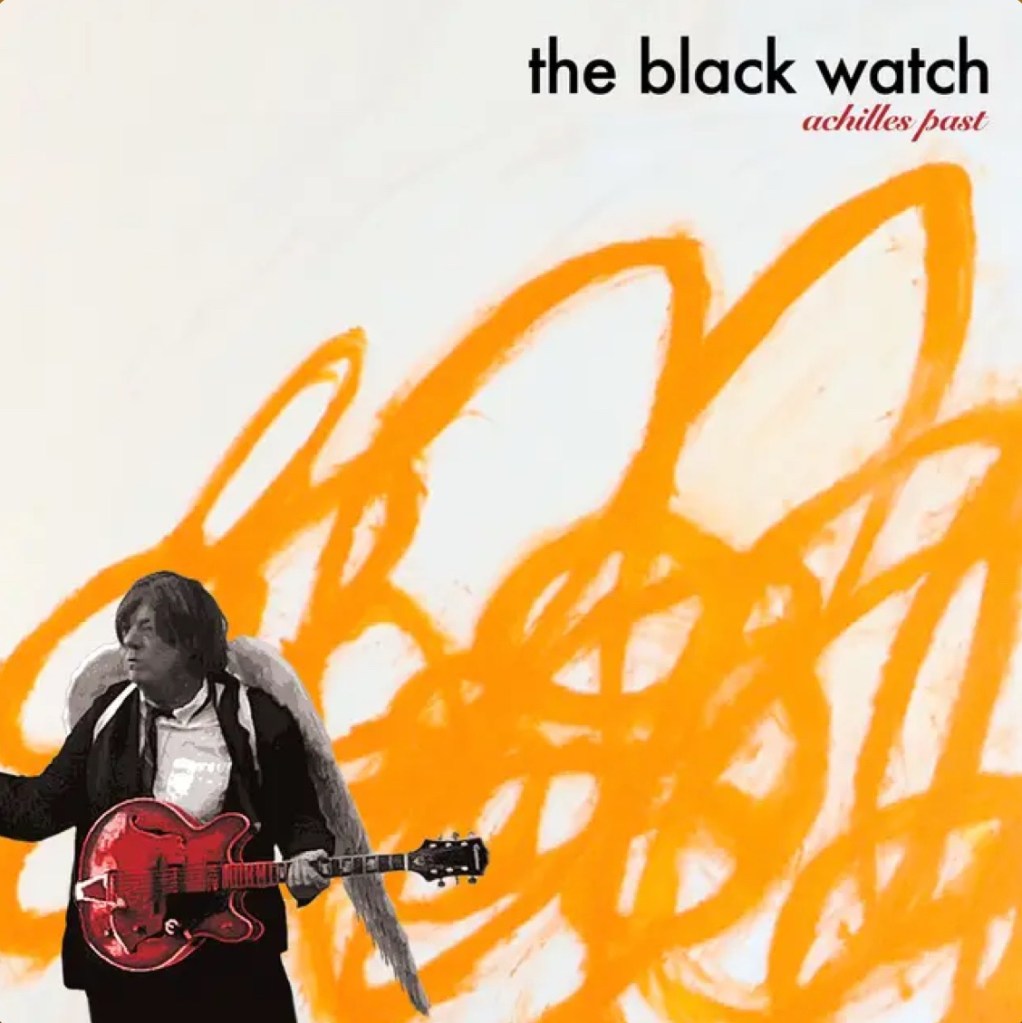
Achilles Past is one of those songs where you instantly know it’s a cut above the rest. The atmosphere clicks right away, and the first notes hit home. The new single by The Black Watch pulls me straight back to the early ’80s, to the time when music started to take over my life, when bands like The Stranglers, Talk Talk, Echo & the Bunnymen, and The Smiths explained the world to me. If a song can, within seconds, transport me back to that feeling—and let me, now 55 years old, be completely carefree for three minutes, wanting nothing more than to just lose myself in the music, with not a trace of nostalgia—then I know for sure: this song is better than the rest.